CoolDown - UPI Speed bump gamification
CoolDown is a gamified system designed to help users curb impulsive spending during UPI transactions. By introducing gentle, mood-aware friction and rewarding self-control, it turns mindful spending into a fun, engaging, and socially rewarding experience.
Product design
Gamification
Roles & Responsiblities
User research, User Mapping, Problem solving, Prototype, Designing visuals, Usability Testing
Duration
2 weeks
UPI transactions in India crossed 19.47 billion in July 2025, making payments nearly frictionless.
While convenient, this ease reduces the “pain of paying,” encouraging impulsive purchases, especially during late nights and emotional triggers like stress or boredom.
Context
Monthly UPI transaction volume
May
Apr
Jun
Jul
Aug
19 billion
20 billion
18 billion
17 billion
16 billion
15 billion
Design a gamified UPI experience that:
Encourages reflection before impulsive purchases
Rewards mindful behavior
Builds long-term financial awareness
Objective
Target Audience
Early-career professionals & students
They frequently use food or commerce apps, overspend impulsively, and seek soft motivation to stay within budgets.
Design Strategy
Empathy Mapping
Prototyping
Problem Solution
Wireframes
Visual Design
Competitive Analysis
Gamification
User Flow
Information Architecture
User Research
User Persona
Usability Testing
Target Role
Design Thinking Process
Emphatize
Define
Ideate
Design
Test
User Research
User Interview
Entrant Analysis
User Persona
User Jouney Map
Goal Statement
Empathy Map
Brainstorming
Card Sorting
User Flow
Paper Wireframes
Visual Design
Prototype
CheckUsability
Survey Insight
Improvements
Emphatize Phase
To understand more on ideas and experiences through non-numerical data, focusing on understanding why or how by using methods like interviews and focus groups
Can you describe your typical process before making an online purchase (e.g., food, groceries)?
Do you usually plan your purchases in advance, or decide in the moment? Why?
How often do you set a budget for online orders? How strictly do you follow it?
Think of the last time you ordered food or groceries without planning — what triggered it?
Does your mood (e.g., stress, celebration, boredom) impact your likelihood of ordering
Have you ever regretted an impulse purchase? If yes, why?
Do you track your food or grocery spending regularly? How?
Would you be interested in earning rewards for avoiding unnecessary orders?
Most of the impulse purchase are done in fast delivery apps
Users have low pre-planning
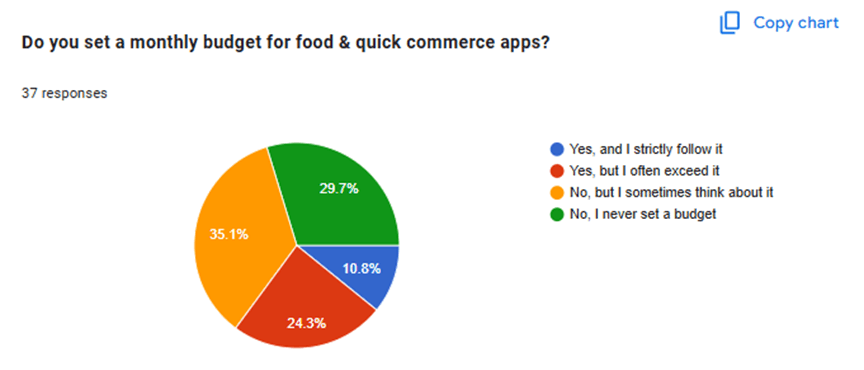
Even when budget exist, self control is weak and overspending is common
User don't feel guilt until they check their bank balance
Triggers are mostly tied to emotions( stress/boredom) and context (night cravings/ offers)
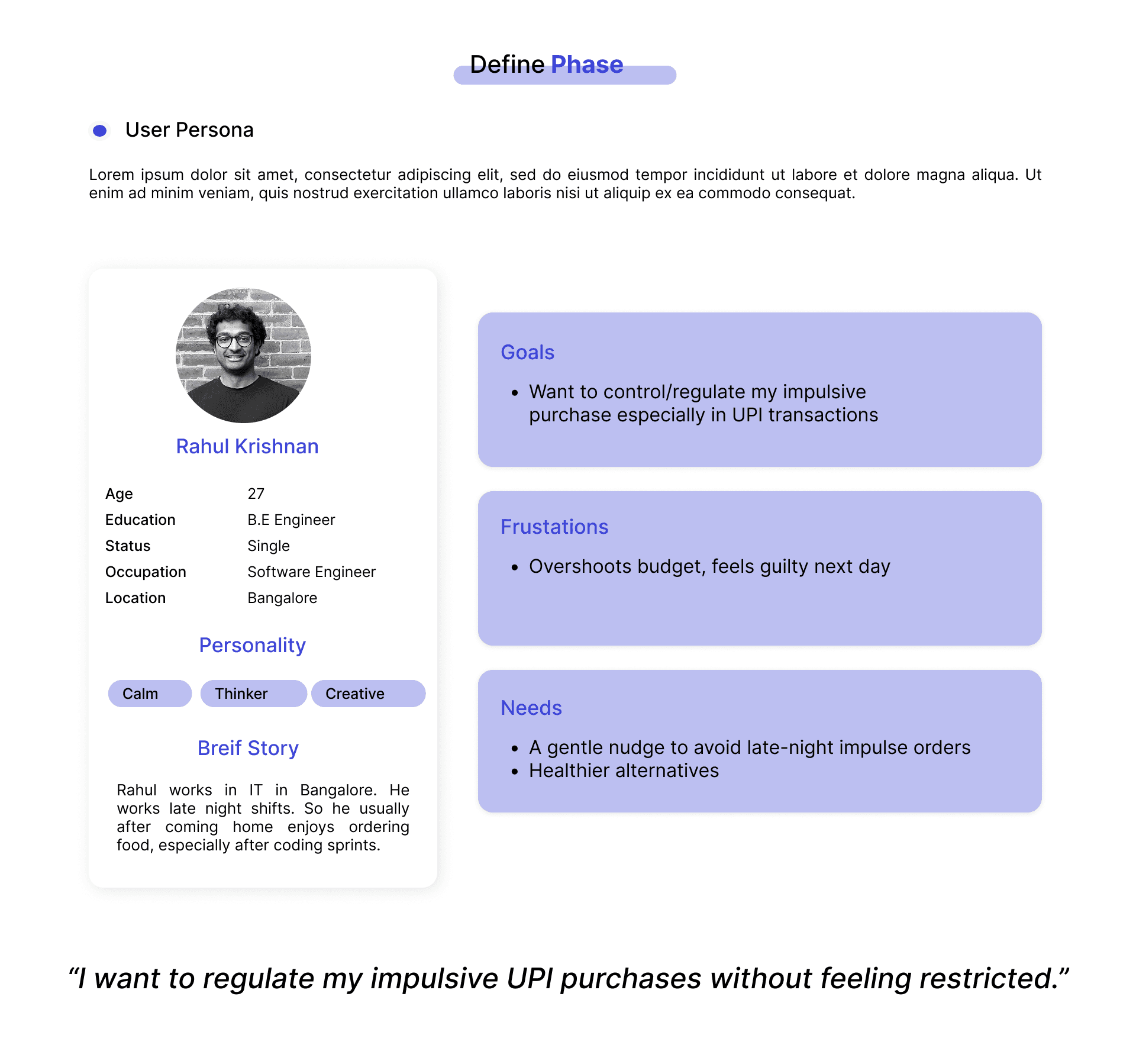
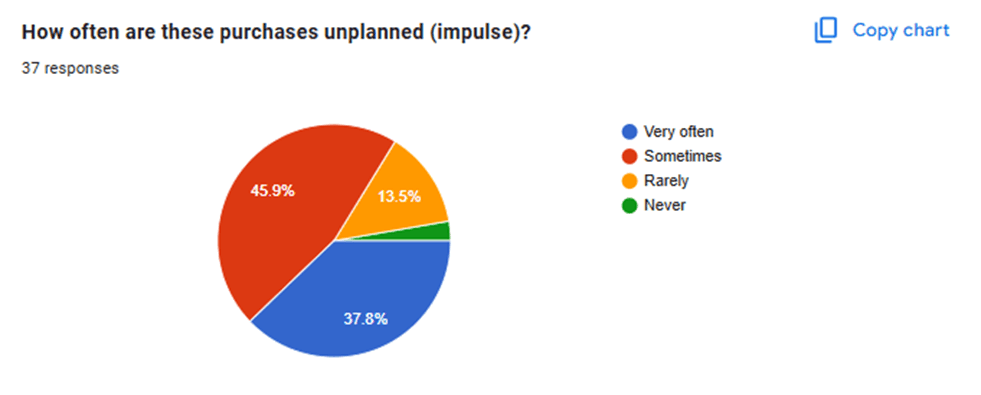
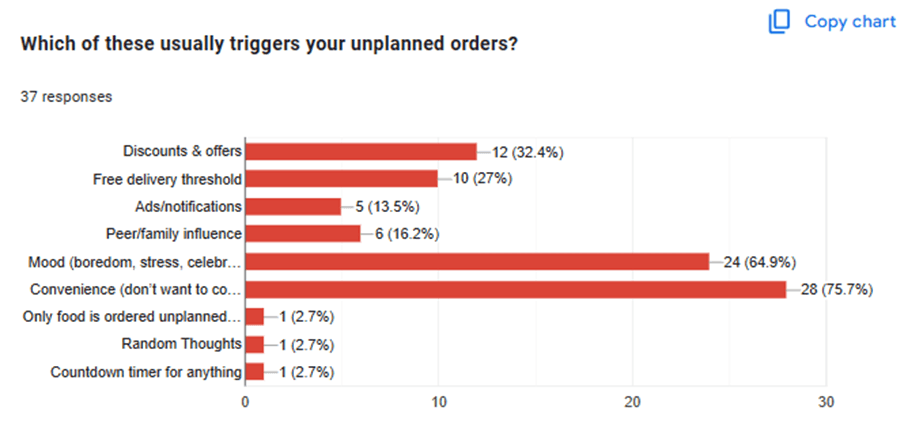
70%+ orders are unplanned, triggered by convenience/moods.
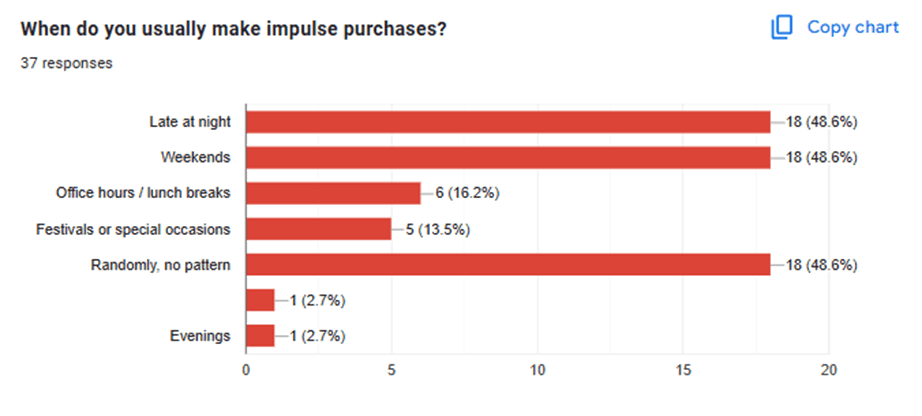
50%+ orders are done at late nights and weekends
60%+ admit UPI makes it easier to buy impulsively.
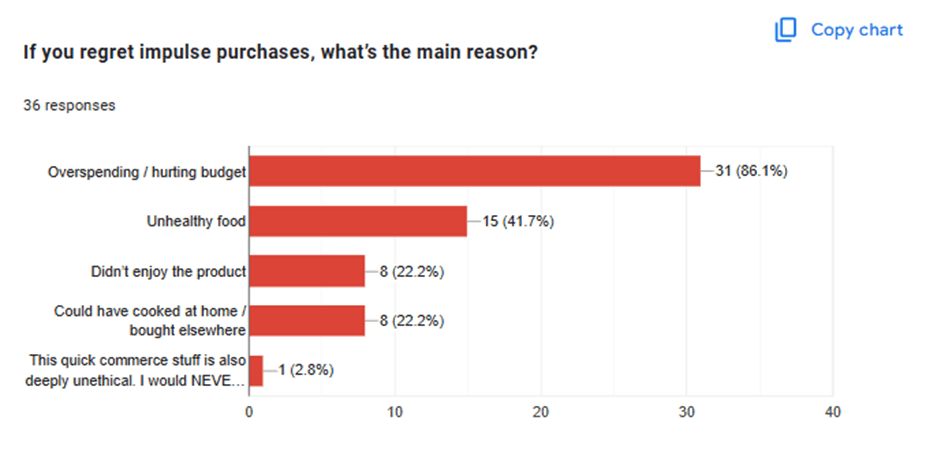
Top regret reasons: overspending & unhealthy food.
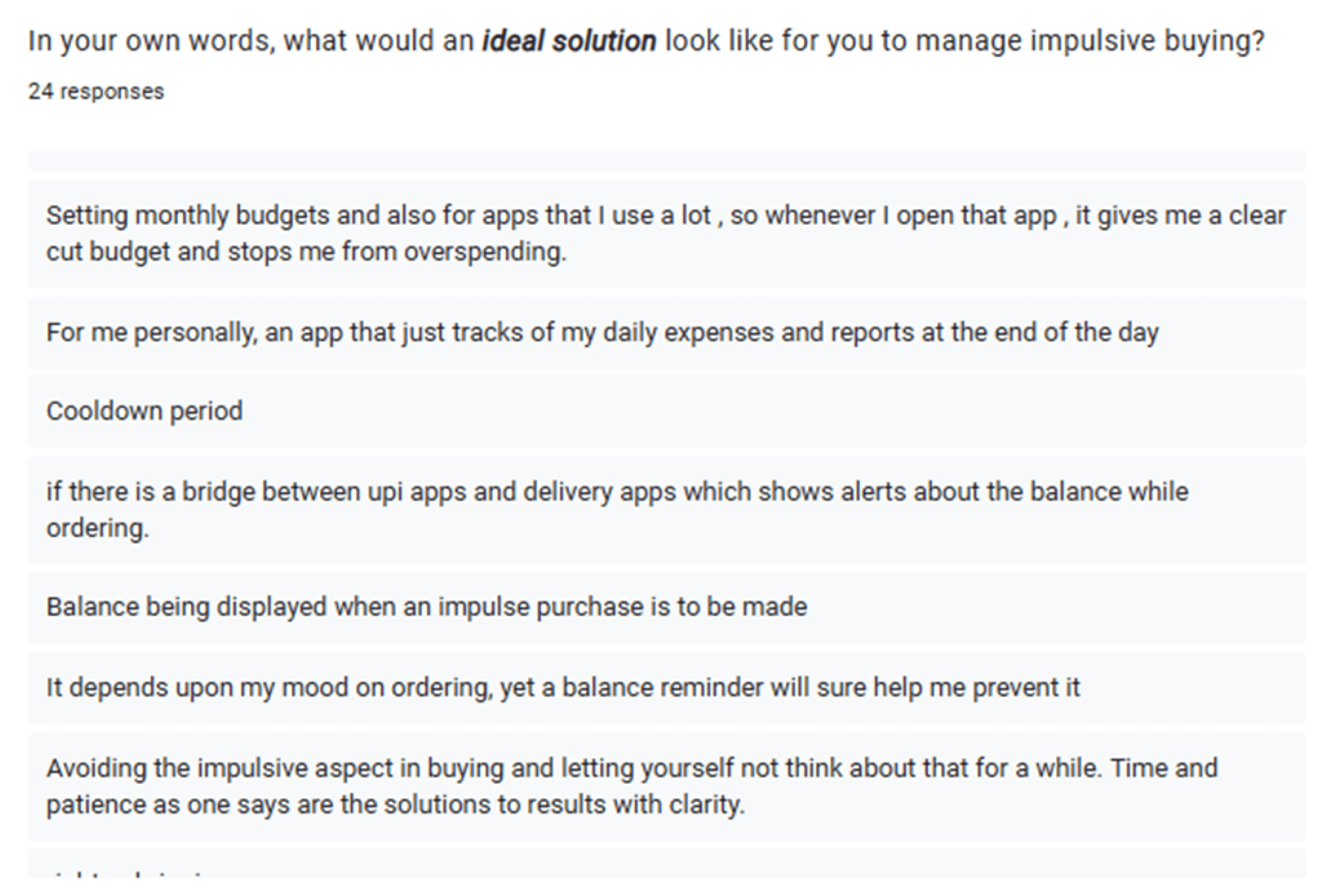
70%+ open to have app to prevent impulse purchase before ordering.
Qualitative Research
Interview Questions
Key Insight Derived
Key Insight Derived
I need to measure and tests phenomena using numerical data, focusing on how much or how many with methods like surveys and experiments, and uses statistical analysis to draw conclusions from larger samples
Quantitative Research
Design Concept
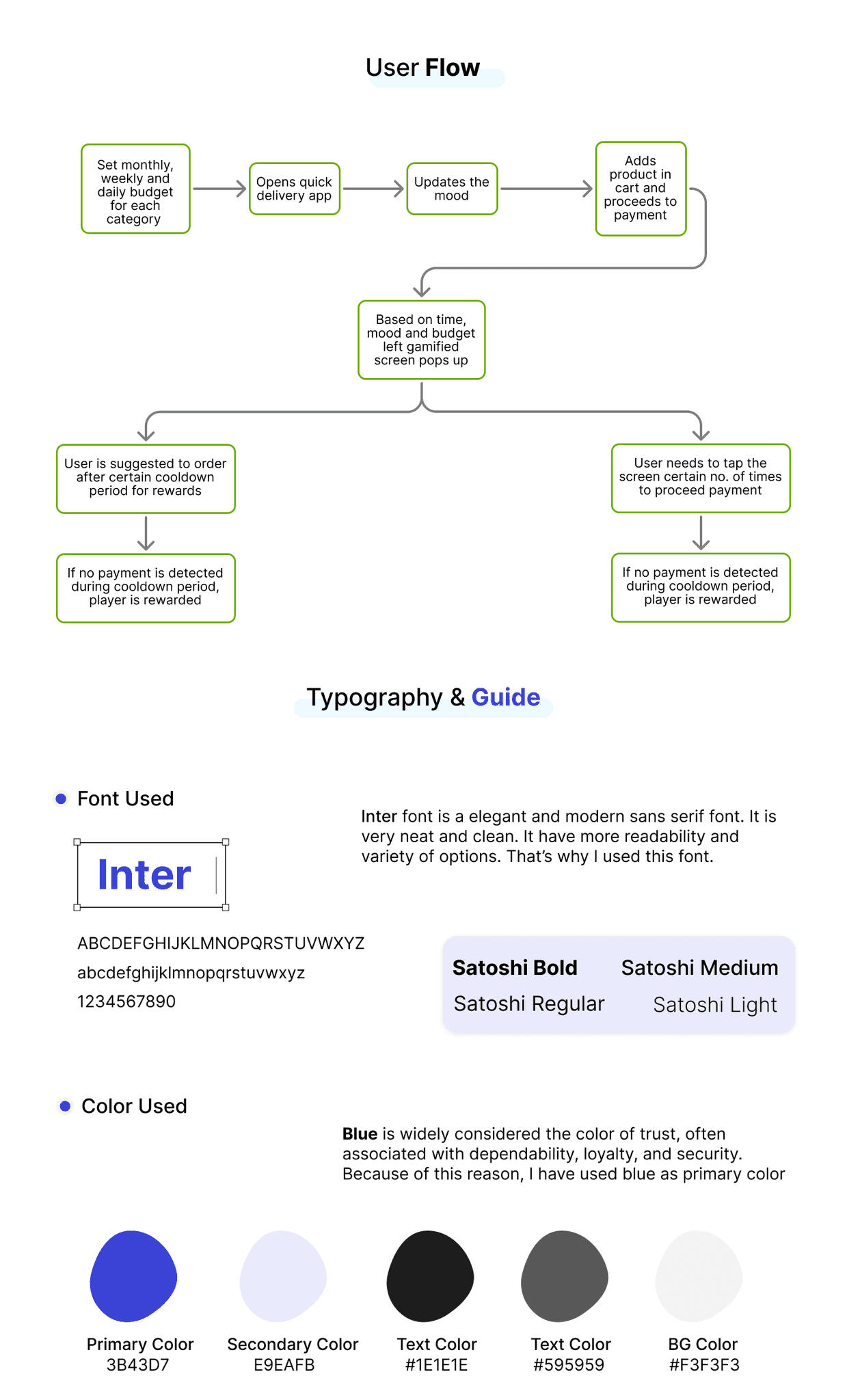
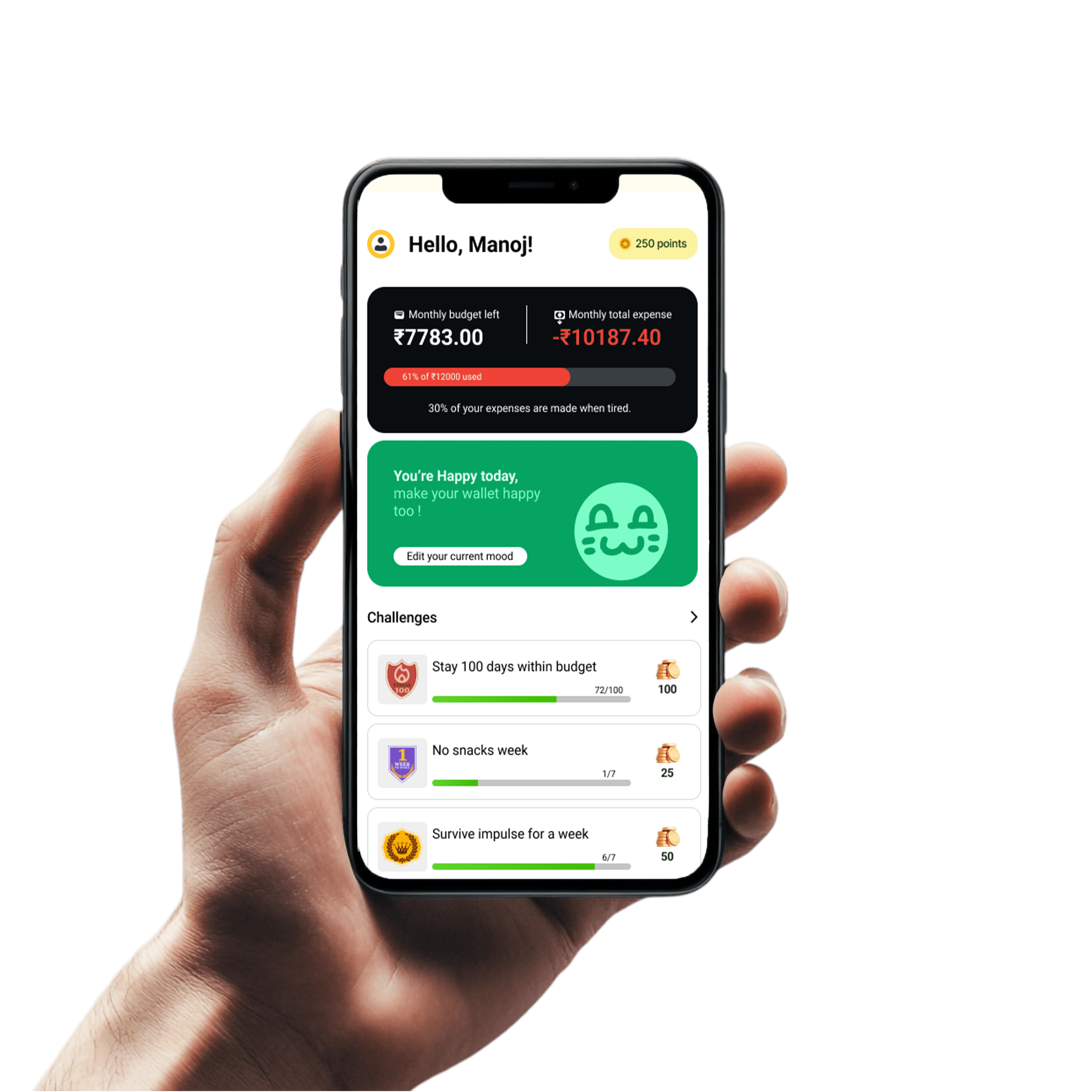
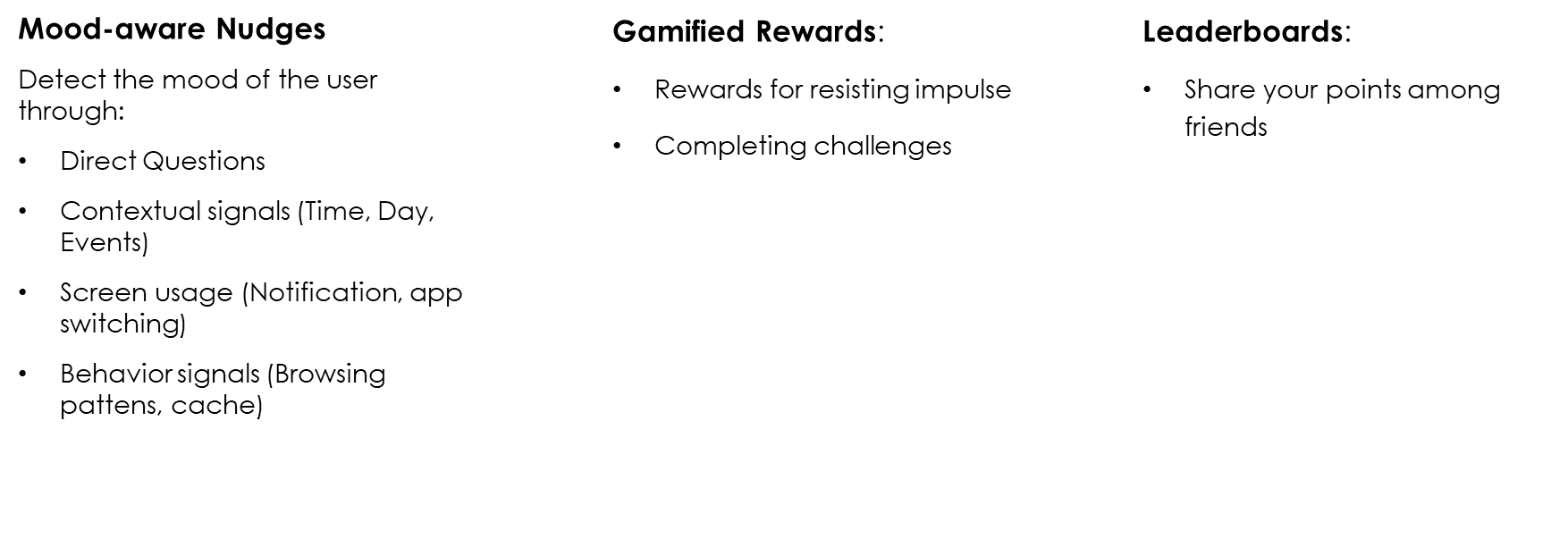
A speed bump for UPI — introducing playful micro-friction before payments using mood-aware challenges, cooldowns, and rewards.
Gamification Mechanics
Cooldown Timer
Introduces delay before payment

Rewards & Streaks
Reinforces restraint
Mood-based Difficulty
Personalized friction
Progress Bar
Visualizes savings goals
Leaderboards
Social motivation

Strategies for Gamification
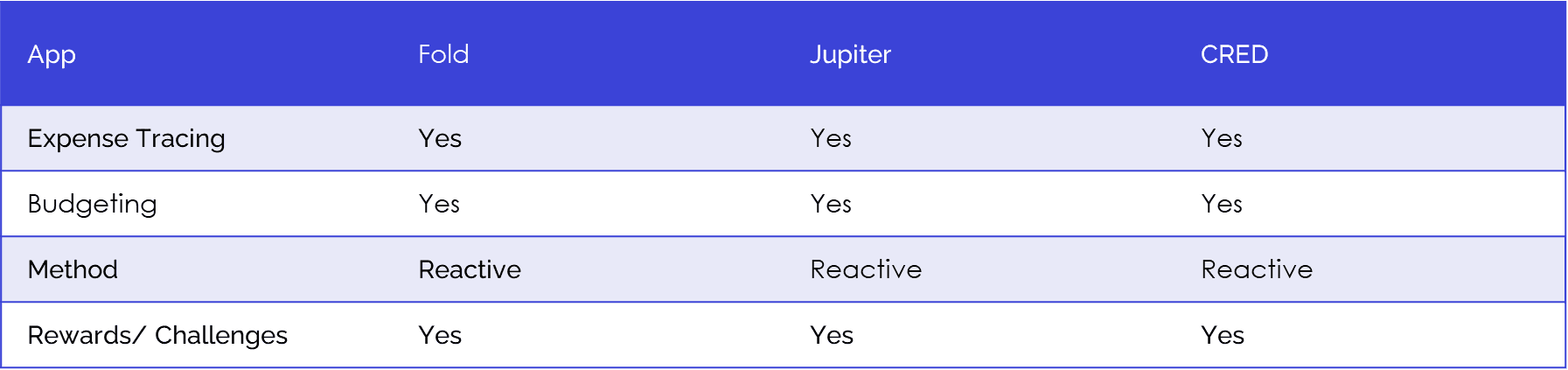
Competitive analysis
Gamification Justification
Learnings
Thank You
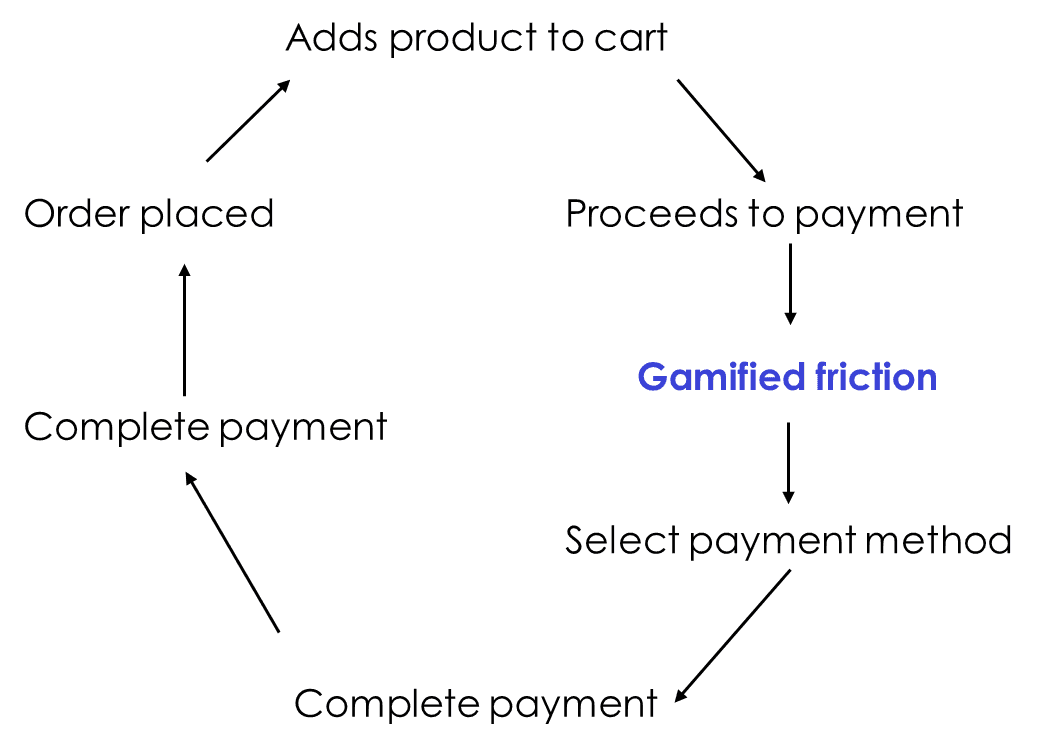
The system uses mechanics that has core gamification breaking the regular payment cycle adding gentle friction without affecting the payment flow.
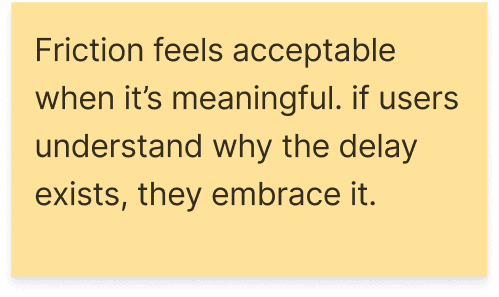
Designing CoolDown taught me that friction isn’t always the enemy of good UX but sometimes, the right kind of friction can protect the user from their own impulses. In this project, I explored how playful resistance could actually make people feel more in control, not restricted.
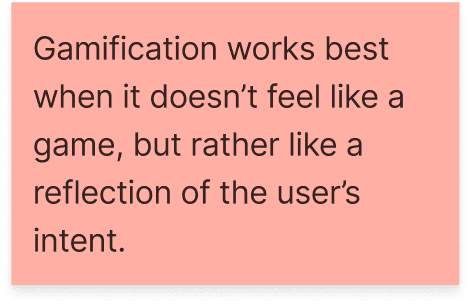
I started by assuming people wanted to spend less. But what they really wanted was to feel better about their choices. The gamified cooldown, rewards, and mood tracking gave them small wins, a moments of satisfaction that replaced guilt with progress.
One of the most surprising realizations was that awareness itself can be gamified.
Even subtle cues like a cooldown animation or a visual reminder of one’s mood can shift behavior without being preachy.
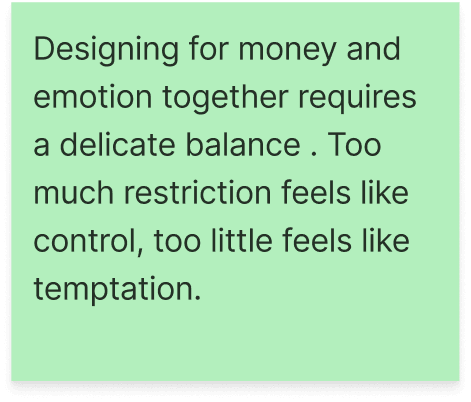
It’s not about blocking spending. it’s about making the act of waiting emotionally rewarding.
Through user feedback and iteration, I also learned that:
Ultimately, CoolDown helped me see how UX design can shape healthier habits not by enforcing rules, but by giving users the space and agency to make mindful choices. It was less about technology slowing people down, and more about helping them pause just enough to stay aligned with themselves.
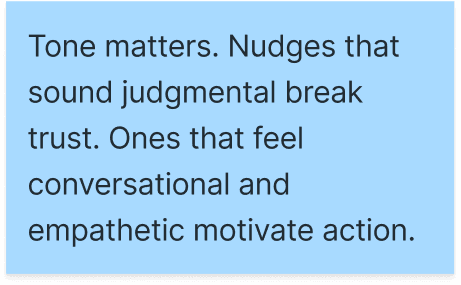
Loss Aversion : Users hate losing rewards.
Streaks : Daily/weekly restraint streaks.
Social Proof: Compare with friends.
Progress Feedback: Visual bar for budget left.
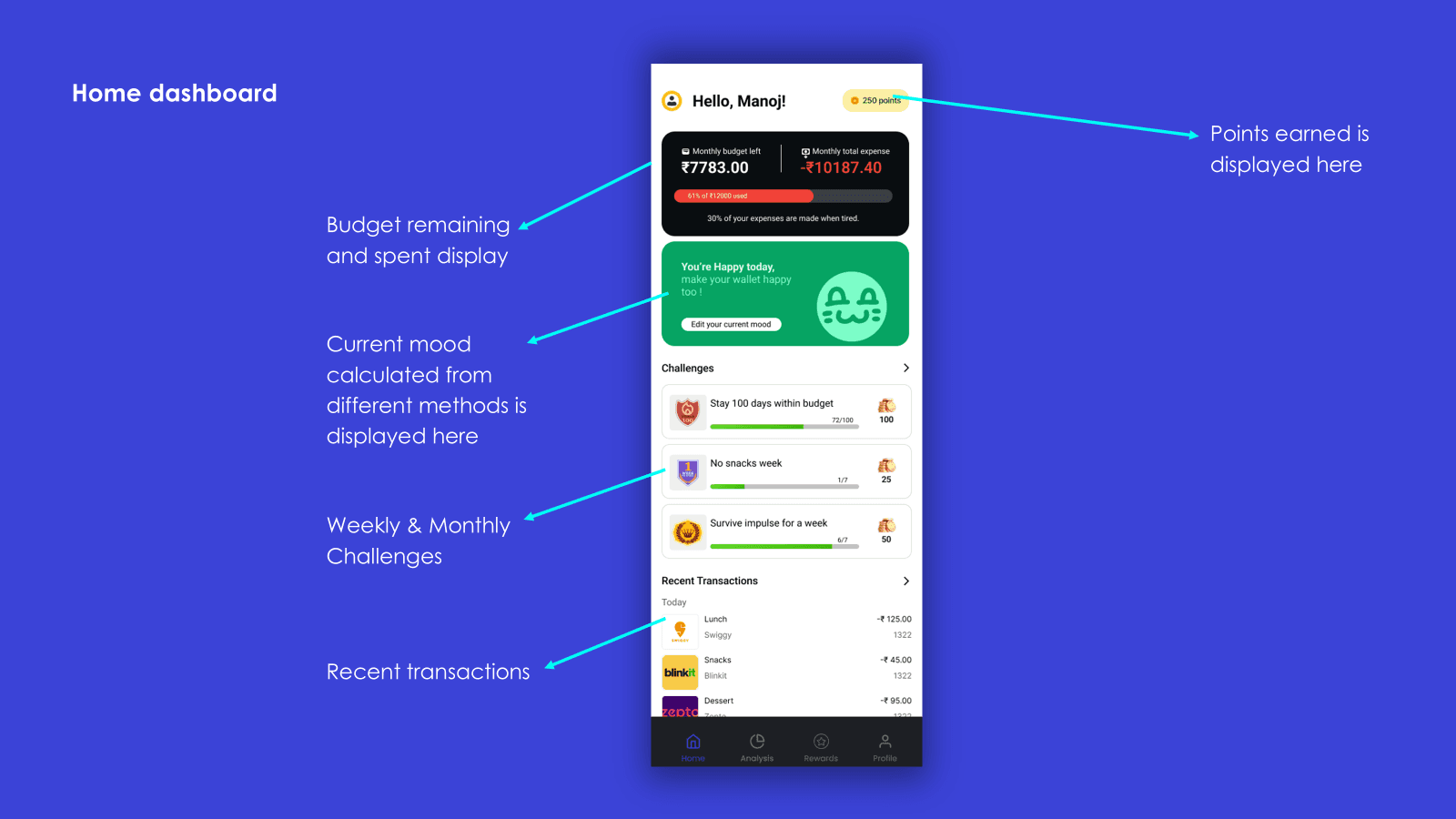
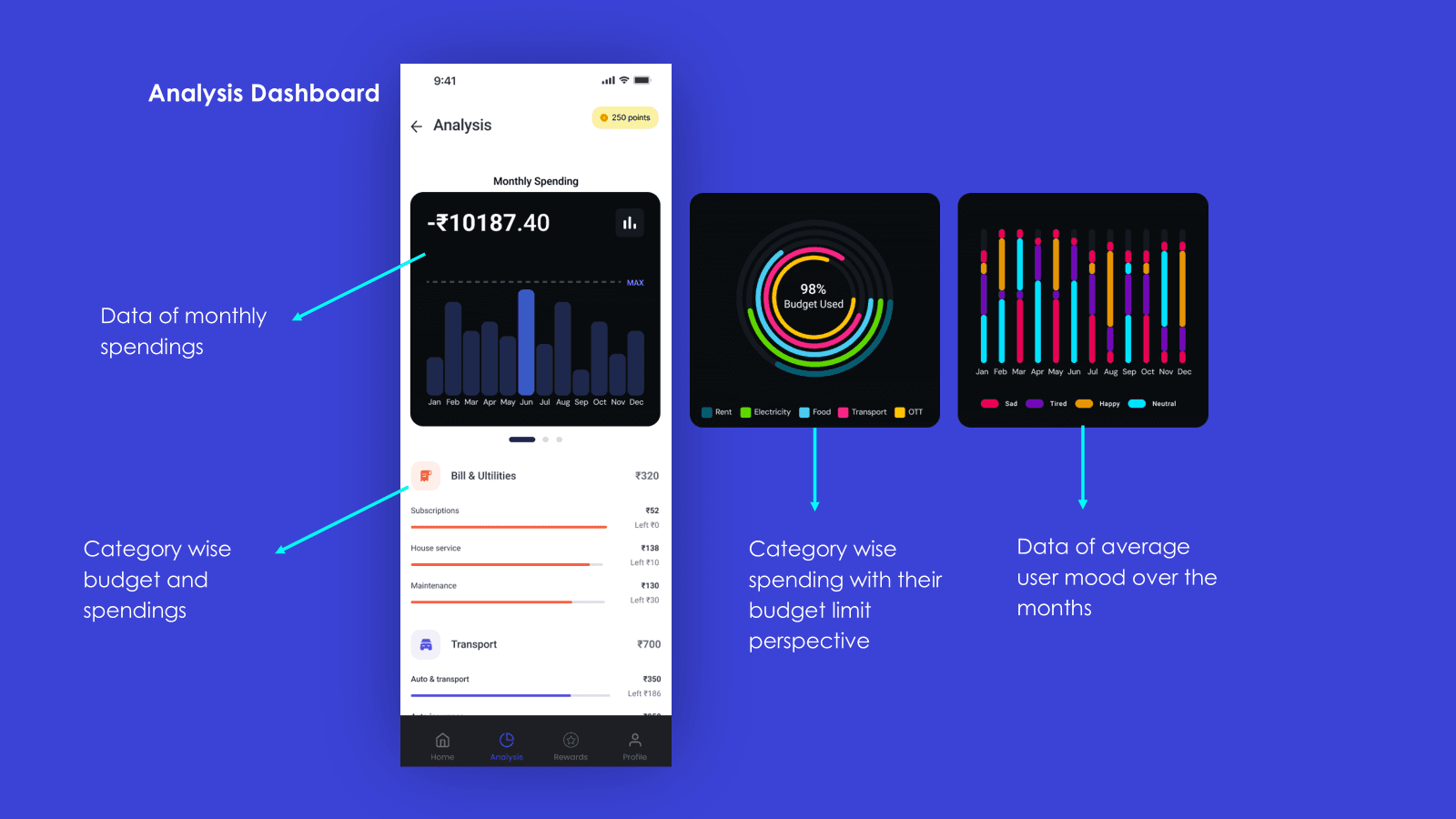
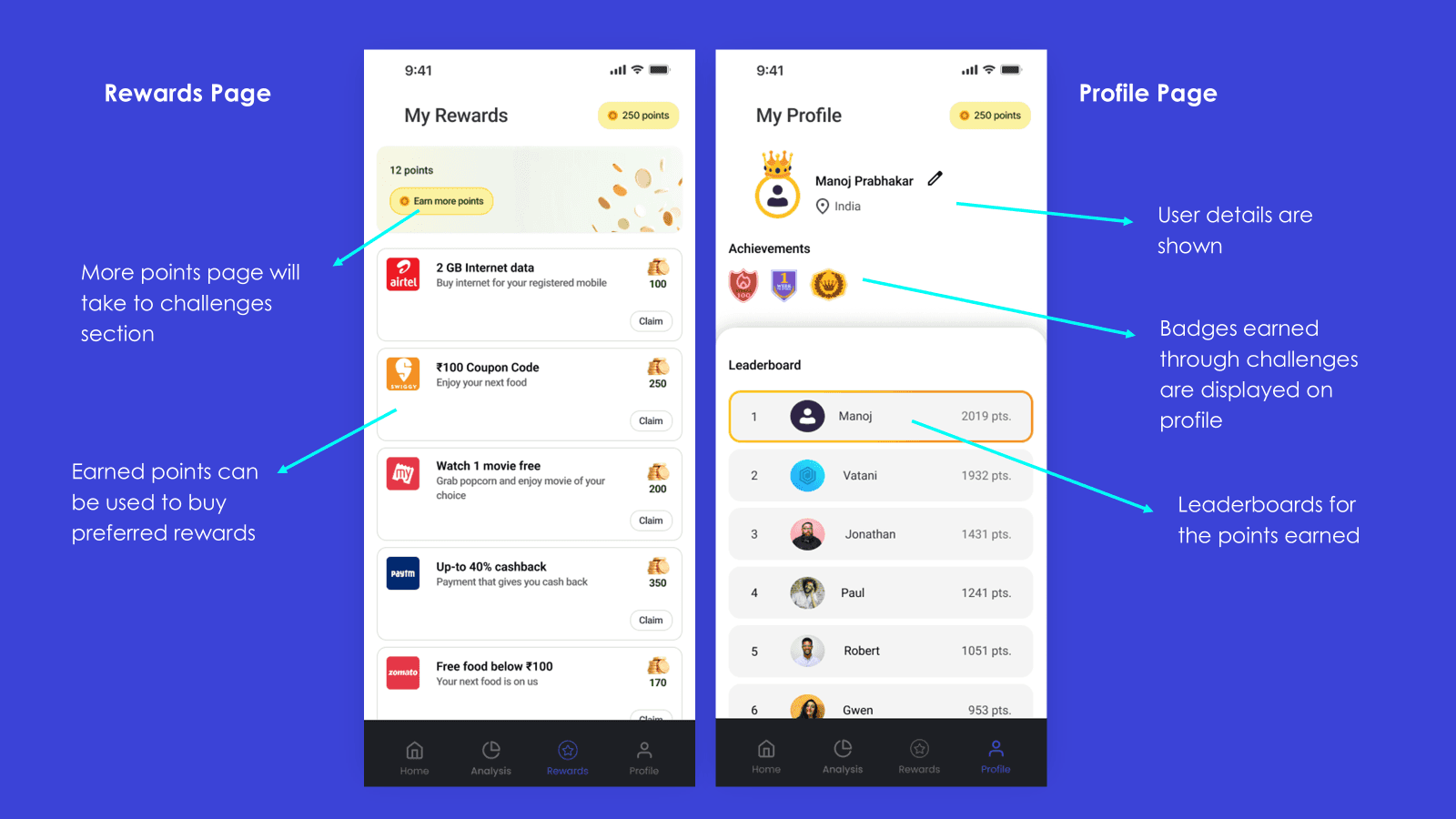
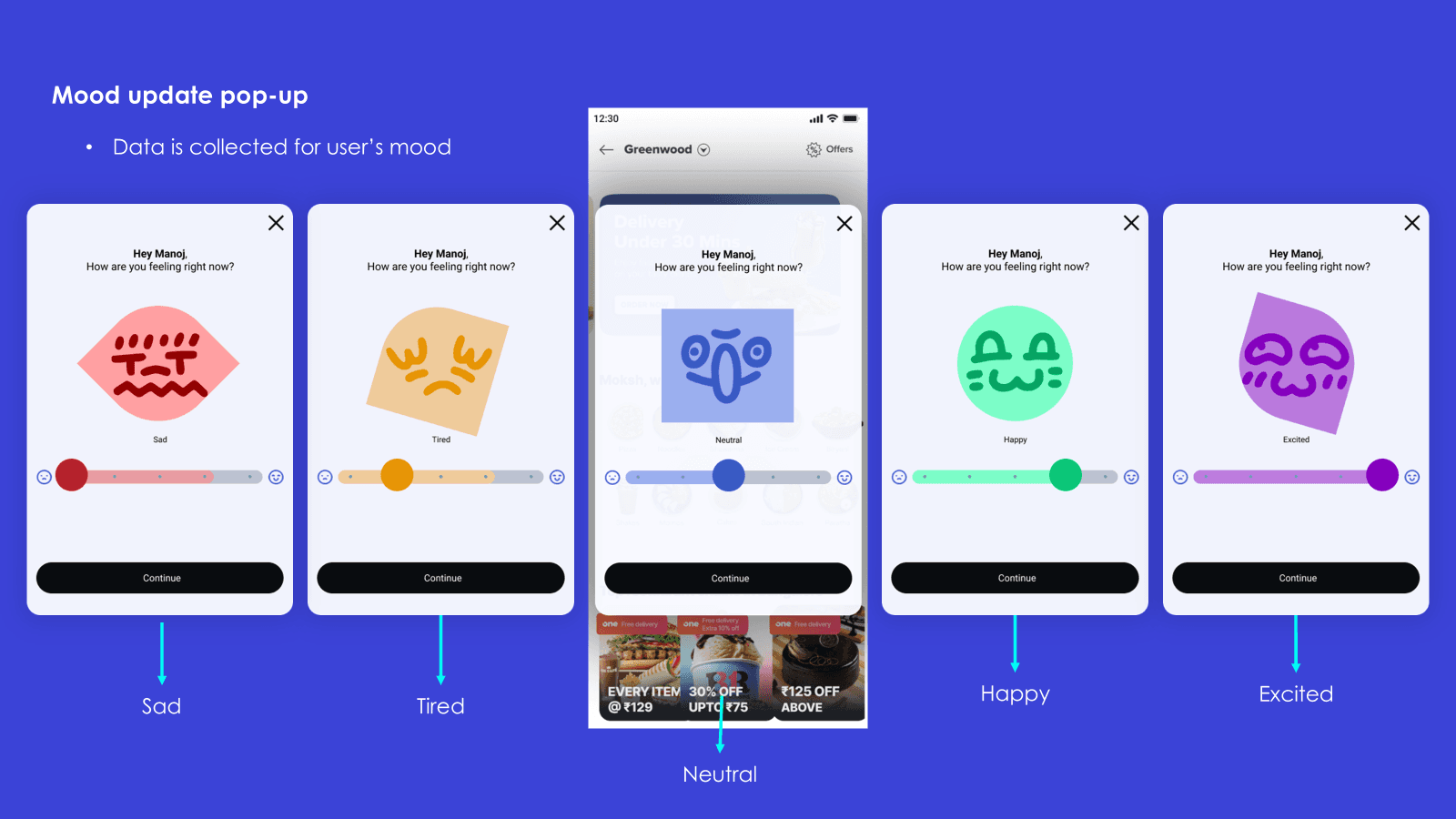
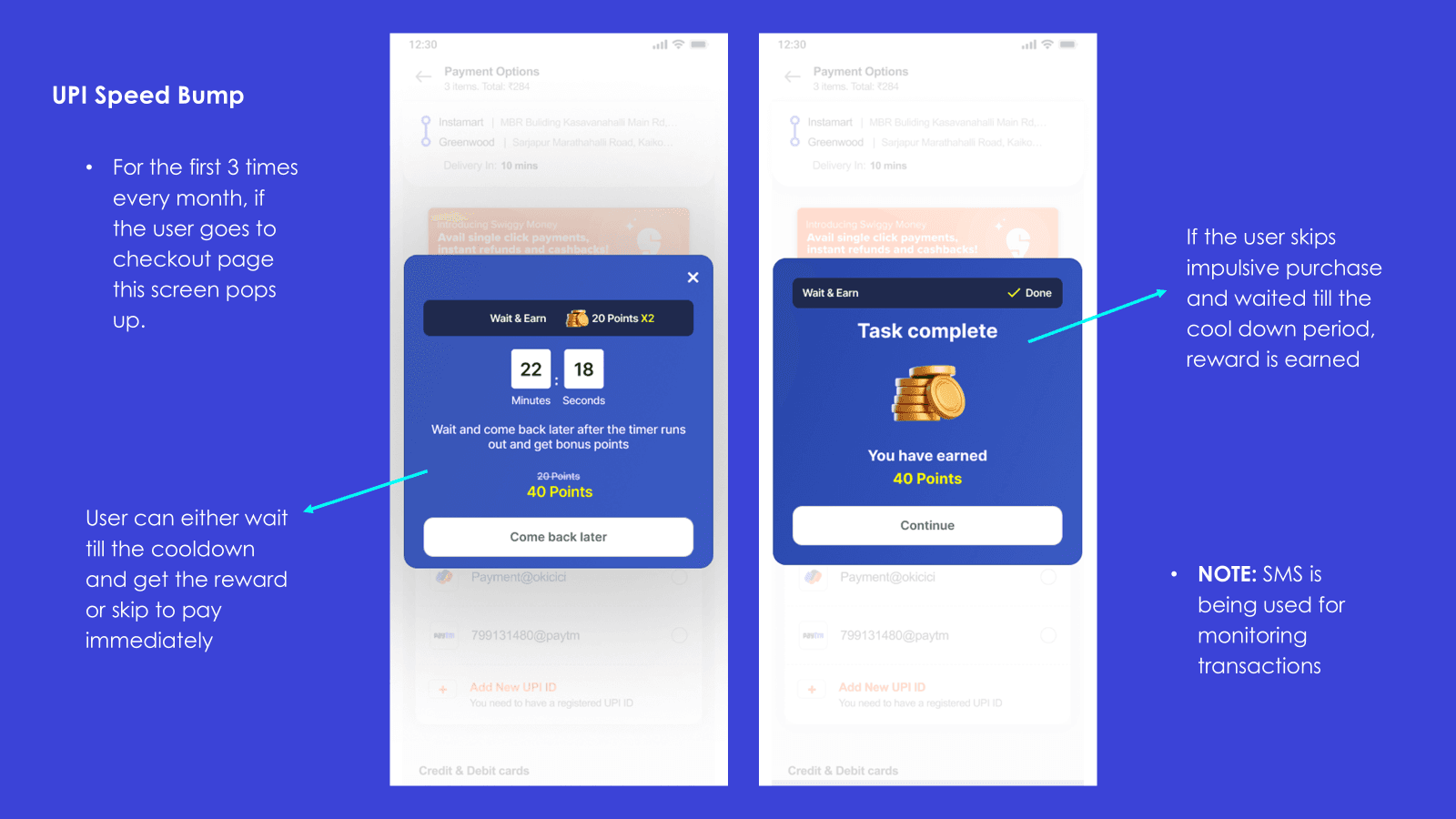
High-Fidelity Wireframes

Encourages mindful micro-decisions at payment stage.
Makes boring “self-control” fun, rewarding, and social
Why Gamification Works: