Facility Zero
A split-screen co-op stealth puzzle game where two escaped lab specimens must coordinate, communicate, and outsmart a high-security facility to survive.
Genre:
Split screen couch co-op
Role:
Level Designer, Game Designer
Duration:
2 week
Team:
Solo
Facility Zero is a cooperative split-screen stealth-puzzle game set in a secret government laboratory hidden beneath a utopian world. Players control two human specimens who have escaped from experimental pods after a system malfunction. Working together, they must navigate through a series of interconnected lab environments. Each filled with scientists, surveillance systems, drones, and environmental hazards.
The game emphasizes teamwork, communication, and timing, requiring players to coordinate actions across different rooms to solve puzzles, evade detection, and survive escalating dangers such as gas leaks and laser traps. From stealthy escapes to synchronized puzzles and a climactic AI shutdown, Facility Zero delivers a tense, cinematic co-op experience where every move and decision depends on mutual trust and precise collaboration.
The project began with a simple idea: “What if two players had to escape a place together, but every action of one affects the other?”

Design Intent
Cooperation:
Players depend on each other to progress
Asymmetric roles:
Players perform distinct but complementary actions.
Environmental tension:
Players read and react to visual, spatial, and auditory cues.
Diegetic guidance:
Information is conveyed through the world itself — not UI.
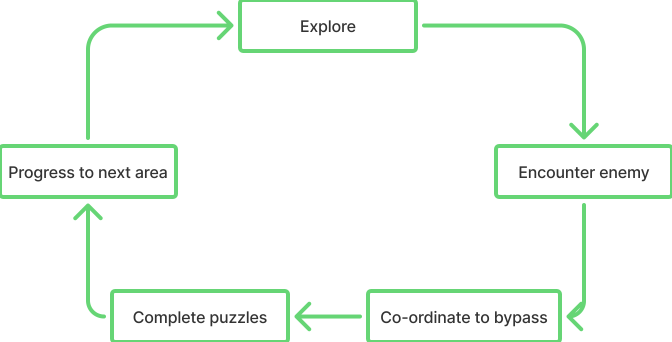
Game Core Loop
Core Systems & Mechanics
Interaction System:
The game’s interaction system is built to feel intuitive and reactive. Everything in the lab responds to the players. From pressing heavy mechanical buttons to rotating pressure valves or unlocking keypads, each action reinforces a sense of tactile control. Every interaction is designed around player intent and feedback - if you see it, you can probably touch it. Subtle audio cues and motion hints guide players toward what’s interactive, keeping the world readable without breaking immersion.


Health & Hazard System
Danger in Facility Zero isn’t just a meter - it’s something you feel through the environment. Gas leaks slowly fill rooms with visible particles, reducing visibility and building tension. As health drops, the screen subtly darkens, creating a sense of suffocation and urgency without explicit UI warnings. This system connects environmental storytelling with player feedback, blending visual tension with emotional response.
Puzzle & Prop Systems
Puzzles are grounded in the environment. Keypad locks, rotating wheels, and timed switches. Each puzzle reinforces cooperation and spatial reasoning: one player might control a mechanism while the other acts on its effect. Clues are woven naturally into the environment - a scribbled note, a flickering monitor, a misplaced object - rewarding players who observe carefully. The design keeps logic puzzles embedded in the world’s fiction rather than feeling abstract or detached.

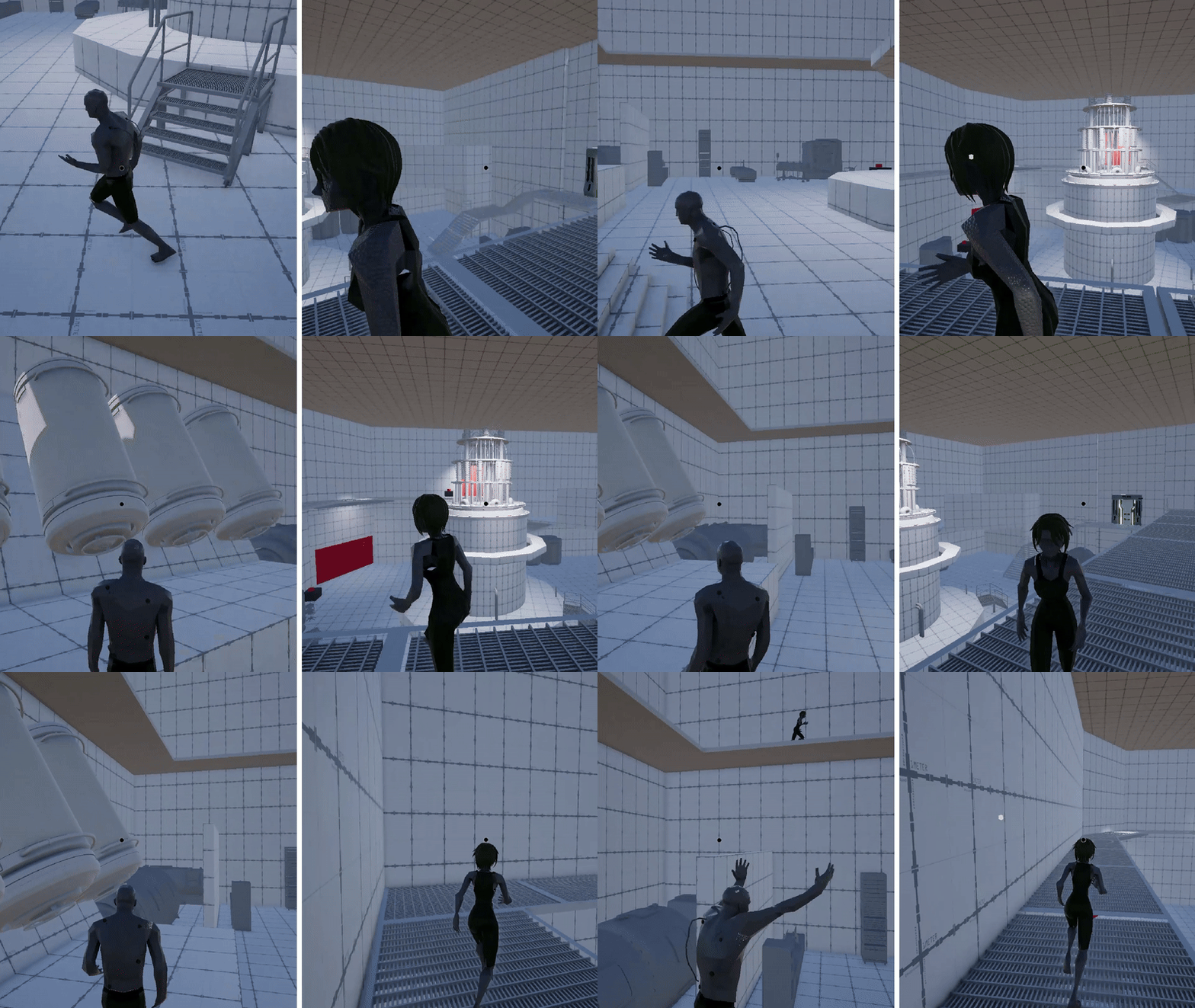
Environment Systems
Movement between spaces is treated like part of the rhythm. Manual doors build anticipation, while auto-sliding ones create quick transitions. Dynamic triggers like closing blast doors or gas releases help control pacing and emotional flow, turning each room into a small narrative beat. These systems make the facility feel alive - reacting to the players, escalating tension, and guiding pacing through environmental behavior rather than scripted events.
Beat Chart
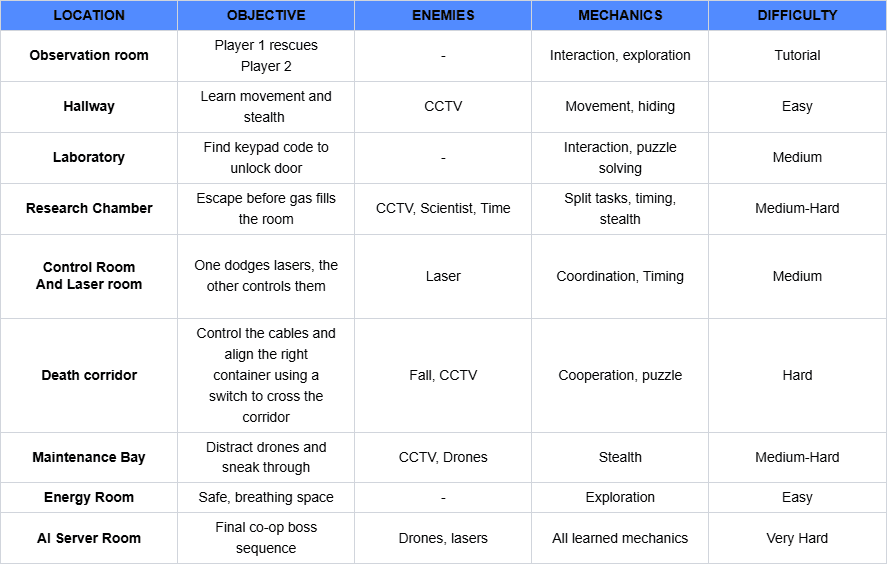
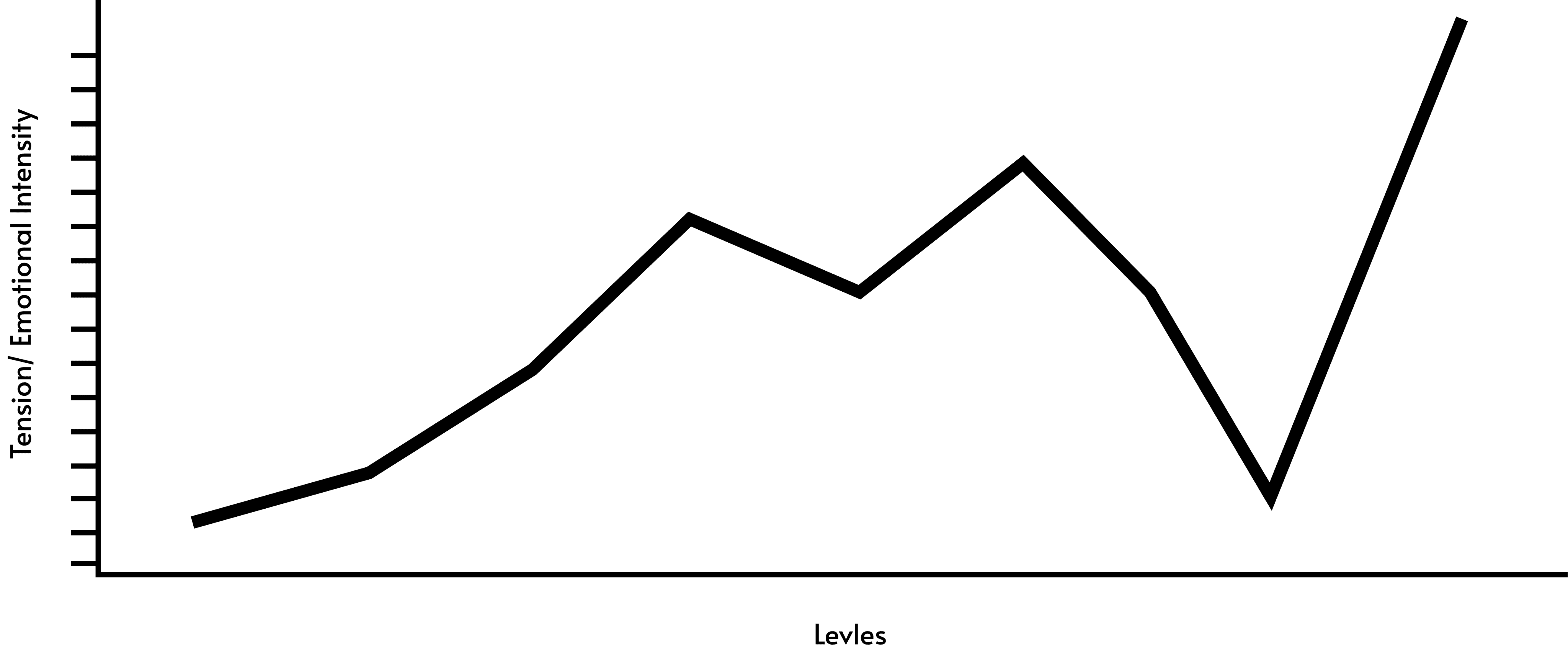
Pacing Structure

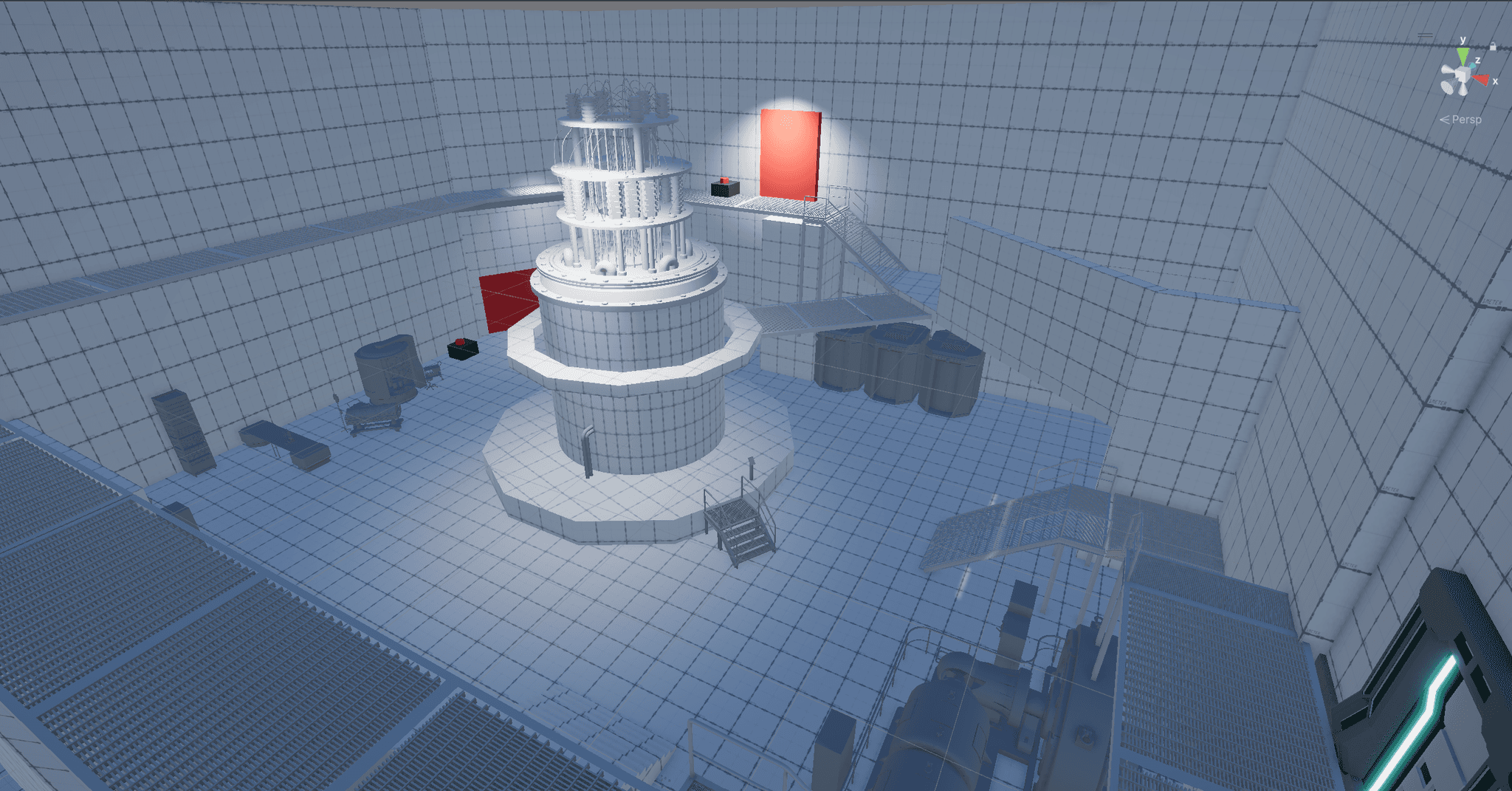
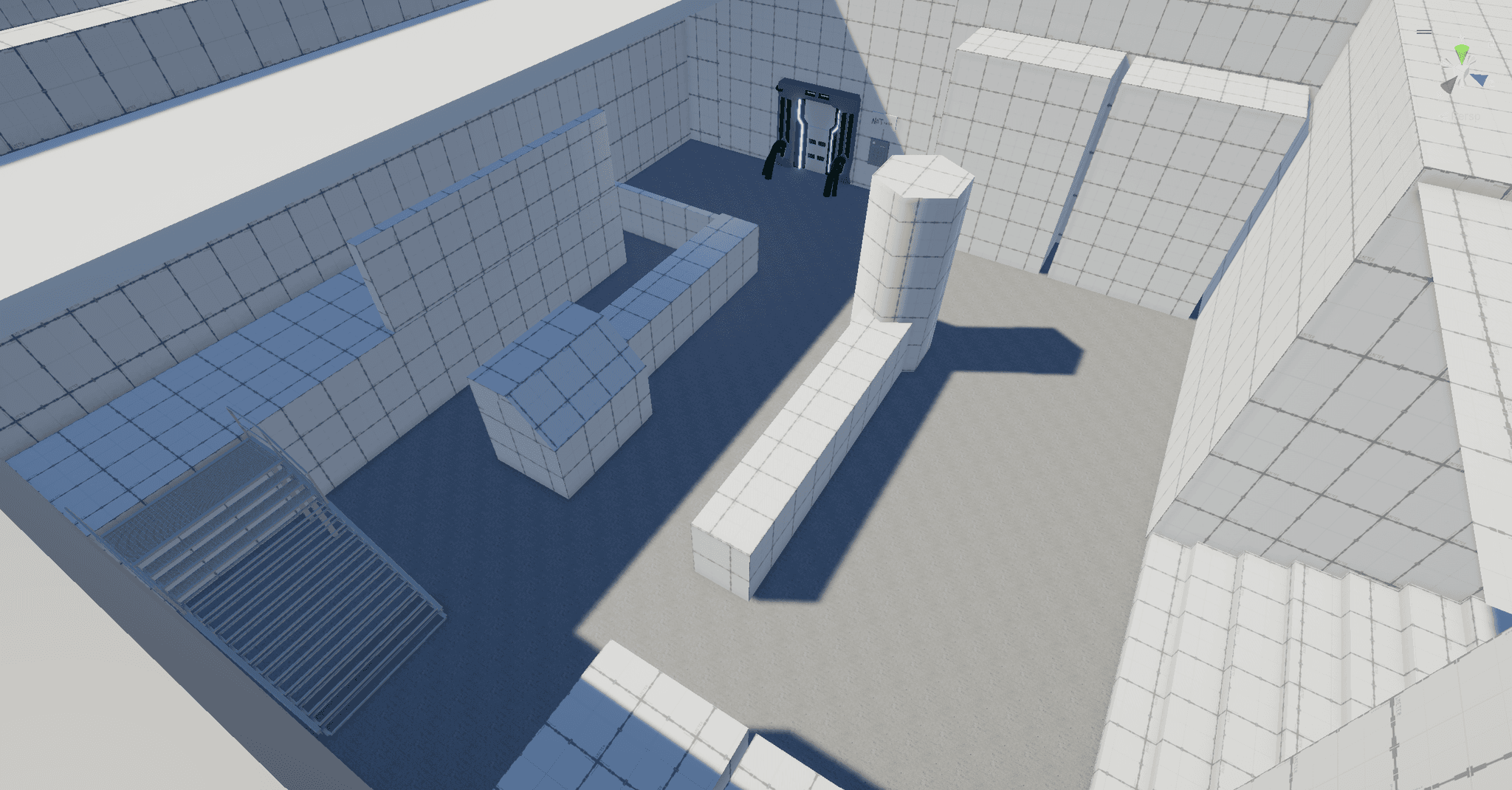
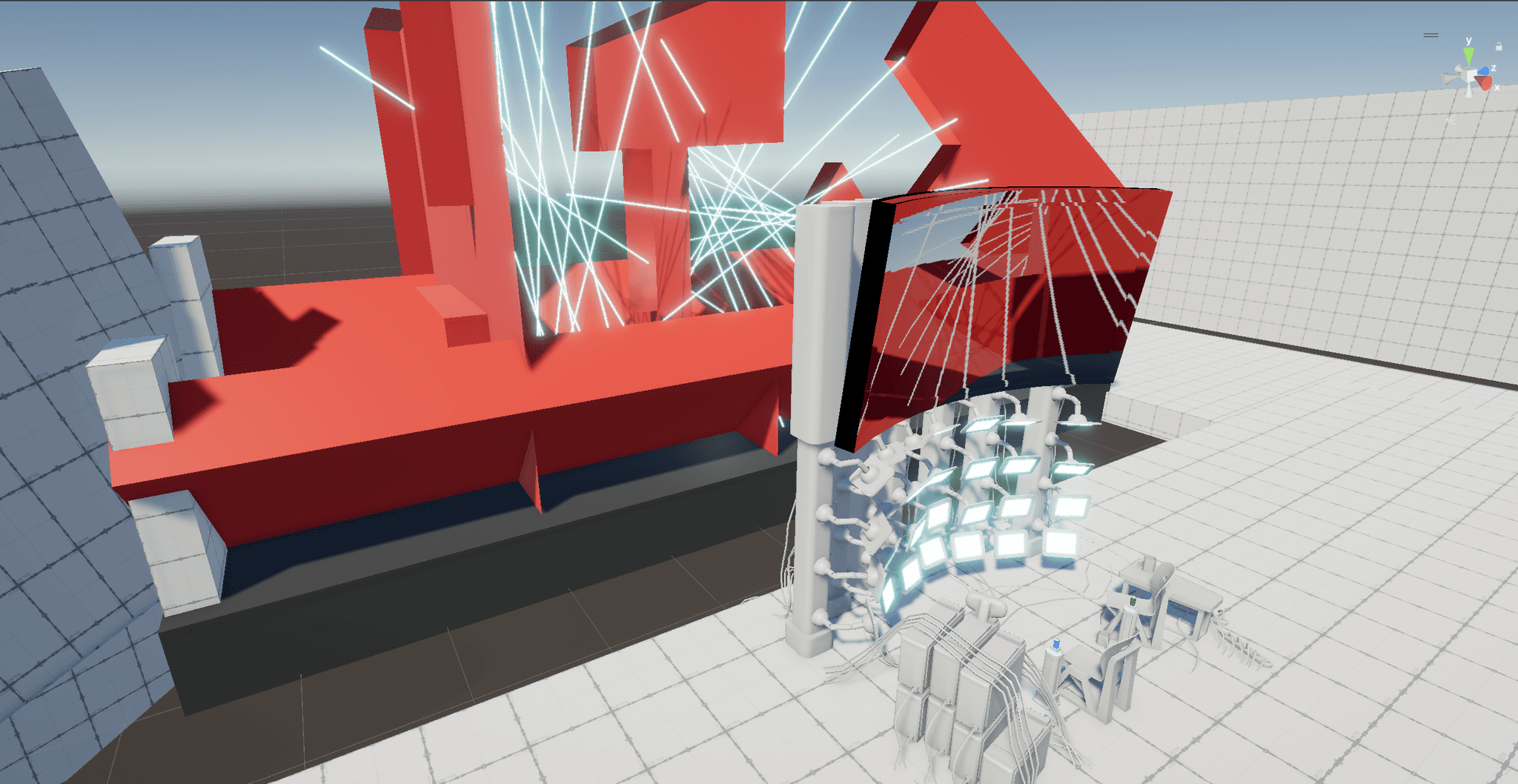
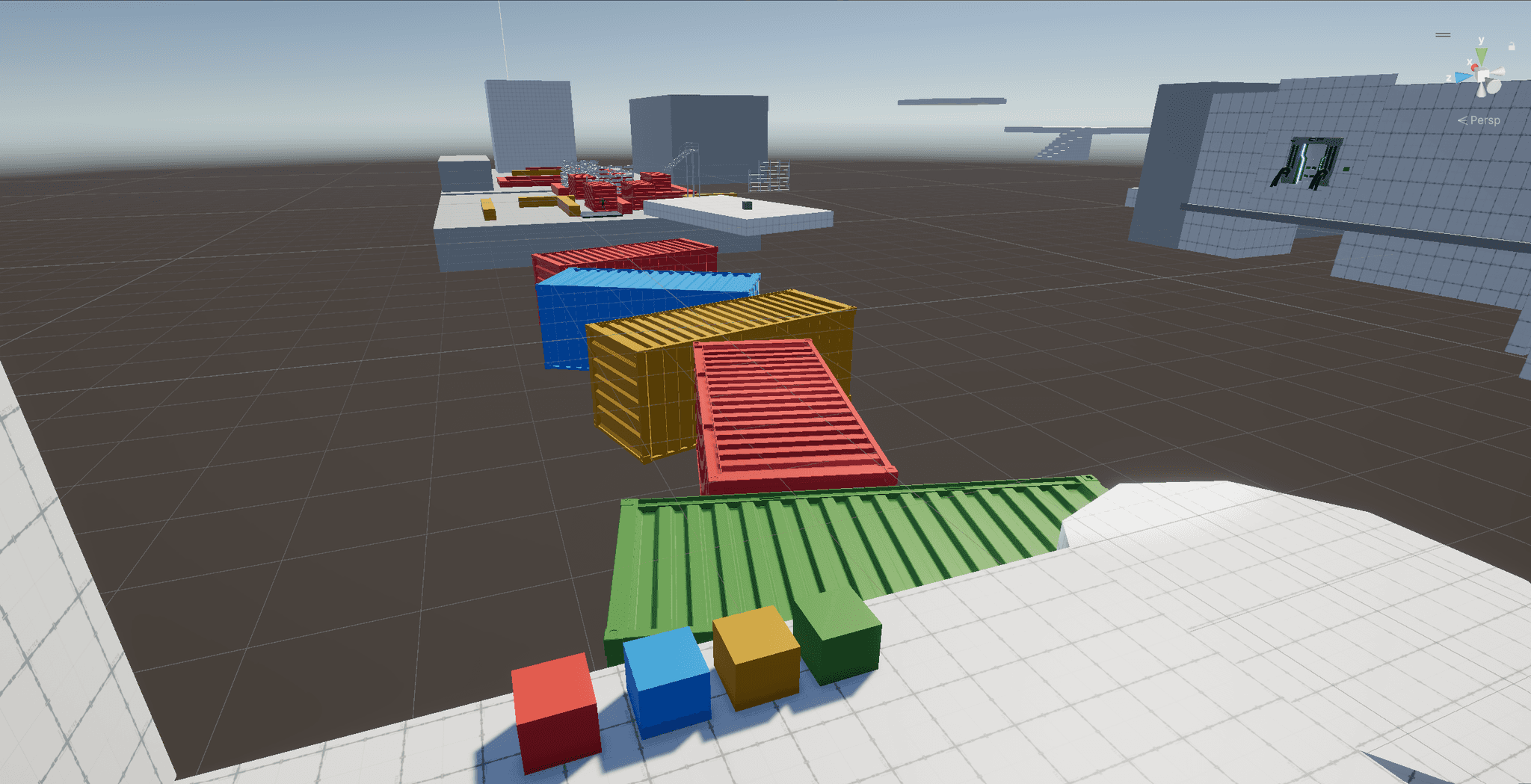
I drew inspiration from the level design philosophy of It Takes Two - particularly how its spaces seamlessly blend shared and individual experiences within a split-screen format. Each player’s path feels uniquely their own yet constantly intertwined with the other’s, creating a sense of dual agency inside one cohesive world.
In Facility Zero, this idea shaped how I approached spatial composition and puzzle flow: each specimen’s route is designed to highlight their distinct abilities while maintaining continuous spatial dialogue between both screens. As co-op researcher José Zagal notes, “the power of collaboration lies not in identical tasks, but in complementary ones” a principle that guided every decision in crafting environments where cooperation isn’t optional, but designed into the architecture itself.
Player Psychology
Trust as a Mechanic:
Each level reinforces interdependence - one player’s action directly determines the other’s outcome, fostering emotional trust and accountability.
Communication Under Pressure:
Puzzles and timed sequences intentionally induce mild cognitive stress to encourage non-verbal coordination and emergent teamwork.
Asymmetric Roles:
Tasks are designed to feel distinct yet equal
Emotional Pacing:
Alternating between high-tension and relief phases helps maintain engagement and prevents burnout, letting players recover emotionally before the next challenge.
The Paradox of Failure:
Drawing from Jesper Juul’s idea, failure moments are used as learning and bonding opportunities, deepening emotional investment rather than causing frustration.
Shared Empathy Loop:
Co-op stress and synchronized success create an emotional mirroring effect - when one feels relief, both do - transforming cooperation into an emotional experience.
Intrinsic Motivation:
Rewards are psychological, not material - the satisfaction of perfectly timed cooperation becomes its own form of feedback and mastery.
Player 1:
Male
Has more HP
Moves slow
More resistant to hazards
Can be spotted easily
Player 2:
Female
Has less HP
Moves fast
Less resistant to hazards
Harder for enemies to detect
For full documentation please download GDD
Thank You